Like a Virgin
Madonna
Nile Rodgers produced Madonna's second album at Power Station studio in New York City.
The story
Like a Virgin is Madonna's second album. It came out on 12 November 1984, was produced by Nile Rodgers at the Power Station in New York, and became the first album by a woman to sell more than five million copies in the United States.
How was it made?
Madonna wanted to produce it herself. Sire Records said no, then let her pick any producer she liked. She chose Nile Rodgers, because she admired what he had done on David Bowie's Let's Dance the year before.
Sessions began in April 1984. Rodgers played guitar, with Bernard Edwards on bass and Tony Thompson on drums: the three of them had been Chic. The engineer, Jason Corsaro, talked Rodgers into recording it digitally. Madonna chose every song and wrote five of them, four with Stephen Bray.
Why did it wait six months?
The album was finished by early May, and then it sat. Her first album was still selling, past a million copies in the United States, and "Borderline" was still a hit, so the label held the new one back.
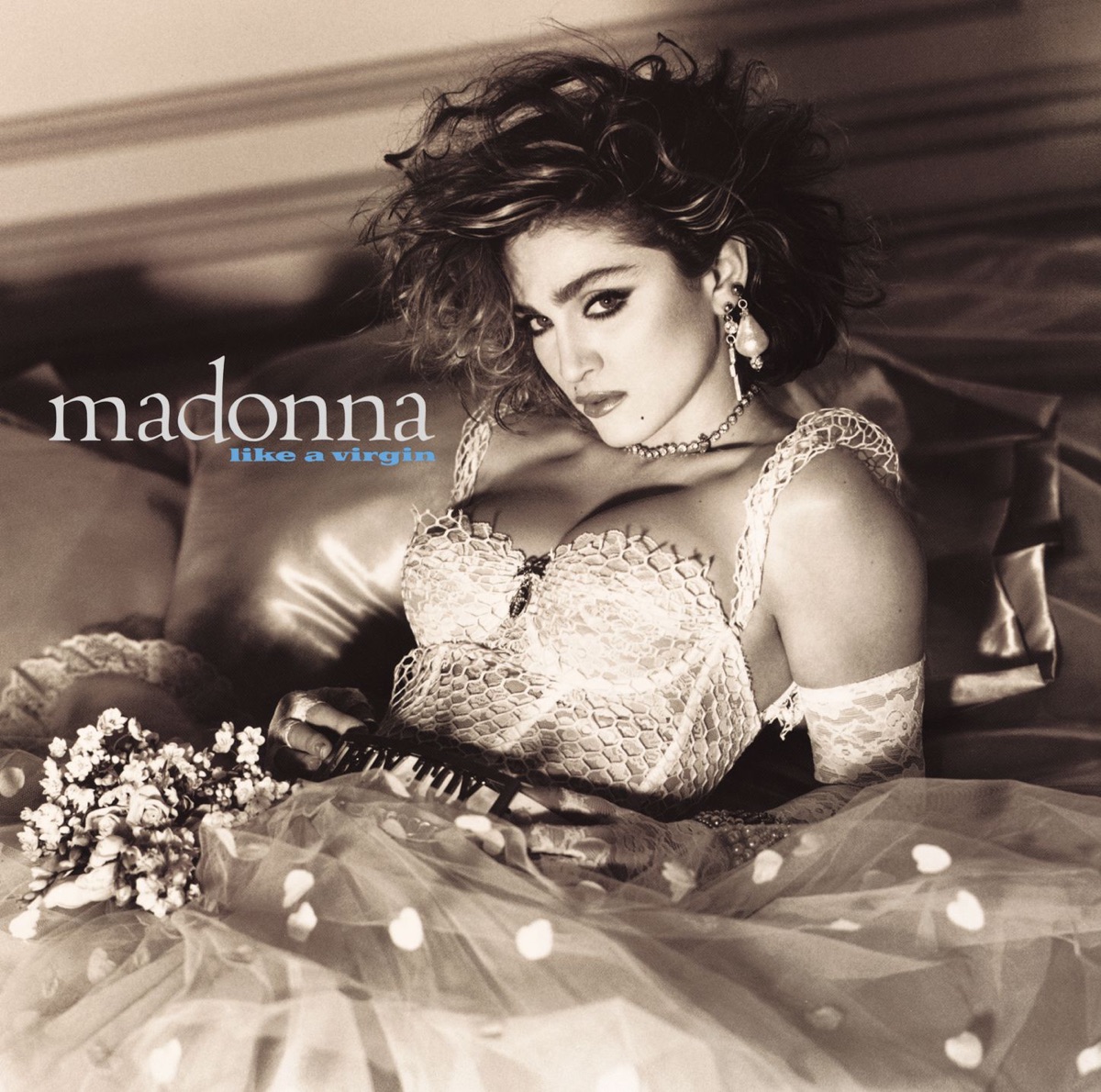
Before it reached the shops she opened the very first MTV Video Music Awards, on 14 September 1984, singing the title song. She came out of a 17-foot wedding cake in the dress from the cover.
How big did it get?
It entered the Billboard 200 at number 70 and reached number 1 on 9 February 1985, where it stayed three weeks. The title song was her first number 1 single in the United States, and "Material Girl" reached number 2. In the United Kingdom the album got to number 1 in September 1985.
It has sold more than 21 million copies around the world. In 2023 the Library of Congress added it to the National Recording Registry.
Who took the cover photo?
Steven Meisel, in a suite at the St. Regis hotel in New York: Madonna on a satin bed in a wedding dress, with a belt buckle that reads "Boy Toy".
Spindl's post about this record: on Instagram · on TikTok · on YouTube · on Facebook
Source: Wikipedia, “Like a Virgin (album)”, read 17 November 2026. Written with AI by the Spindl team from that article, and checked against it sentence by sentence.
The title track's bass line was reworked from the Four Tops' 1965 hit 'I Can't Help Myself (Sugar Pie Honey Bunch).'
Don't miss a Friday.
The week's records, a story and the new episode. One email, every Friday.
We'll send a link to confirm it's you. Unsubscribe in one click from any email. Privacy